For hospitals and cancer centers
Make a first pass easier to inspect.
Discuss how evidence-linked trial matching could fit your research workflow.
Talk about NavigatorClinical trial matching · Navigator
Navigator analyzes patient records to identify clinical trials a patient may qualify for. A clinician or research team decides whether formal screening is appropriate.
Investigational · Lung cancer model undergoing retrospective validation using hospital data from leading academic and non-academic centers
In plain language
Clinical trial matching software compares information in a medical record with a study’s entry rules. Navigator analyzes records to identify trials a patient may qualify for.
A potential match is a starting point for review. A clinician or research team decides whether formal screening is appropriate.
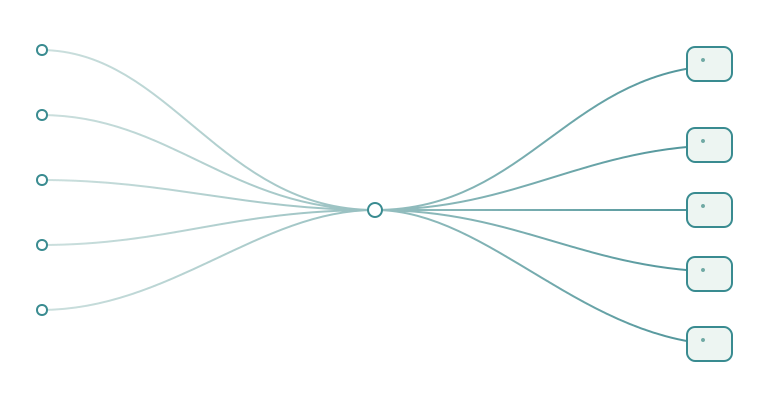
Find relevant facts in structured fields and clinical notes.
Compare record facts with a trial’s inclusion and exclusion criteria.
A reviewer checks the record facts behind each criterion.
A care or research team reviews the findings. Navigator does not enroll anyone.
Illustrative concept
Formal trial screening follows the study protocol and is completed by the research team.
For hospitals and cancer centers
Discuss how evidence-linked trial matching could fit your research workflow.
Talk about NavigatorFor sponsors and CROs
Talk with our team about research use, study criteria and evaluation.
Discuss a studyValidation
Researchers compare a model’s results with known information from past records. Bowhead has not reported performance results for this model.
The cancer digital twin is an investigational research concept, not a diagnosis or treatment recommendation.
Patients will soon be able to use a beta version at bowhead.ai. Please check back regularly for updates. The beta may produce inaccurate matches. Please review all trial criteria with a trained medical professional.
No. It is not a decision about eligibility. The study team applies the protocol and completes the formal screening process.
Researchers test a tool on past records, then compare its outputs with known information. Bowhead’s lung cancer model is being evaluated this way using hospital data from leading academic and non-academic centers.