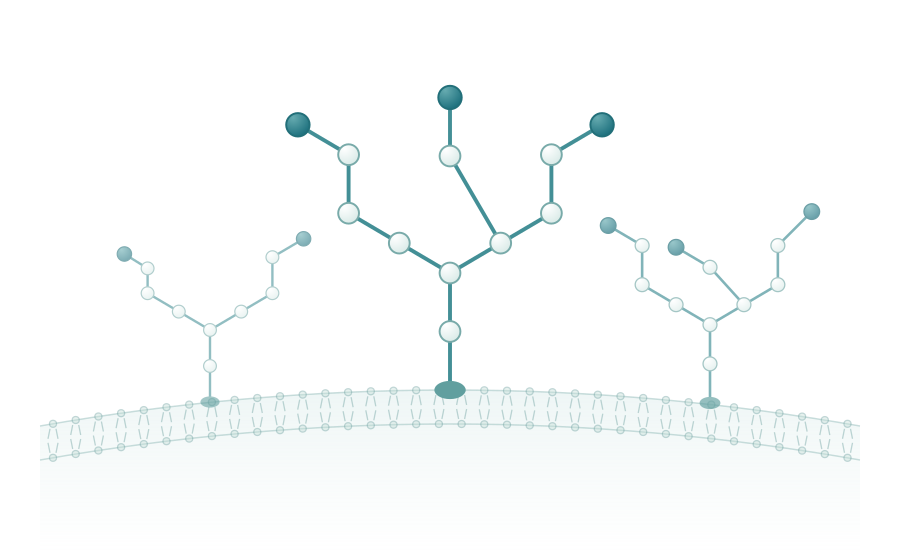
Glycan
A chain or branch of sugar molecules attached to a cell or protein.
Glycoscience
Every cell has a coat of sugars. Bowhead studies how to protect this surface, including an investigational polysialic acid colloid for organ preservation.
Investigational · Not approved for clinical use · Patent filing
In plain language
Glycoscience includes the study of sugars attached to cells and proteins. These sugar chains, called glycans, help shape how cell surfaces work.
This sugar-rich layer is also called the glycocalyx (gly-koh-KAY-liks): a coat on the outside of many cells. Its structure can change during stress and disease.
A chain or branch of sugar molecules attached to a cell or protein.
A family of sugars often found at the ends of cell-surface chains.
A chain or polymer made from linked sialic acid units.
Background reading: Essentials of Glycobiology: Sialic Acids · Lewis et al., SNFG nomenclature (2023)
The research question
Organs can be stored outside the body before transplantation. Preservation fluids help maintain organ tissue during that period.
Bowhead is developing polysialic acid as a non-immunogenic natural colloid designed as an alternative or replacement of existing oncotic agents found in preservation fluids, which are mainly synthetic and immunogenic.
Status
Bowhead’s patent portfolio includes a filing for polysialic acid organ preservation.
Scientific lead

Chief Scientific Officer · Principal investigator for Bowhead's polysialic acid preservation program
His work primarily addresses glycobiology applications.
Capabilities of Bowhead's in-house laboratory.
 Cell culture
 Immune system organoid development
 Protein chemistry analysis
 High-performance liquid chromatography
 Flow cytometry
 PCR
PCR Cryopreservation